The hypothesis
being tested in this case study is: Manual Lymphatic Drainage (MLT) reduces
chronic knee swelling following total knee replacement by enhancing lymphatic
circulation and promoting fluid resorption. This technique is hypothesized to
decrease postoperative edema, improve joint mobility, and enhance patient
recovery outcomes compared to standard care alone in post-knee replacement rehabilitation.
1. Abstract
Chronic knee swelling is a common complication following total knee replacement (TKR), impacting rehabilitation, joint mobility, and overall patient satisfaction. Persistent postoperative edema can hinder functional recovery and prolong dependence on pain medication and physiotherapy. This case study investigates the application of Manual Lymphatic Therapy (MLT)—a gentle, rhythmic technique designed to stimulate lymphatic flow—as a complementary intervention to standard rehabilitation.
This case study involved a 63-year-old female patient who presented with persistent knee swelling 6 months post-total knee replacement. She showed significant edema, discomfort, and limited range of motion of the left knee. A four-week intervention of Manual Lymphatic Therapy was introduced, consisting of two 30-minute sessions per week. Standard care (physiotherapy and pain management) continued concurrently. Clinical outcomes were measured pre- and post-intervention using limb circumference, pain scores (Visual Analog Scale), active range of motion (goniometry), and a self-reported functional status questionnaire (WOMAC).
After four weeks
of MLT, the patient showed a measurable reduction in knee and calf
circumference (average decrease of 2.1 cm), decreased pain (VAS score reduced
from 6 to 3), and improved knee flexion (from 90° to 110°). The patient also
reported improved ease in daily activities, with a 25% improvement in the WOMAC
functional subscale. No adverse effects were reported, and the patient
described the treatment as relaxing and beneficial.
2. Introduction
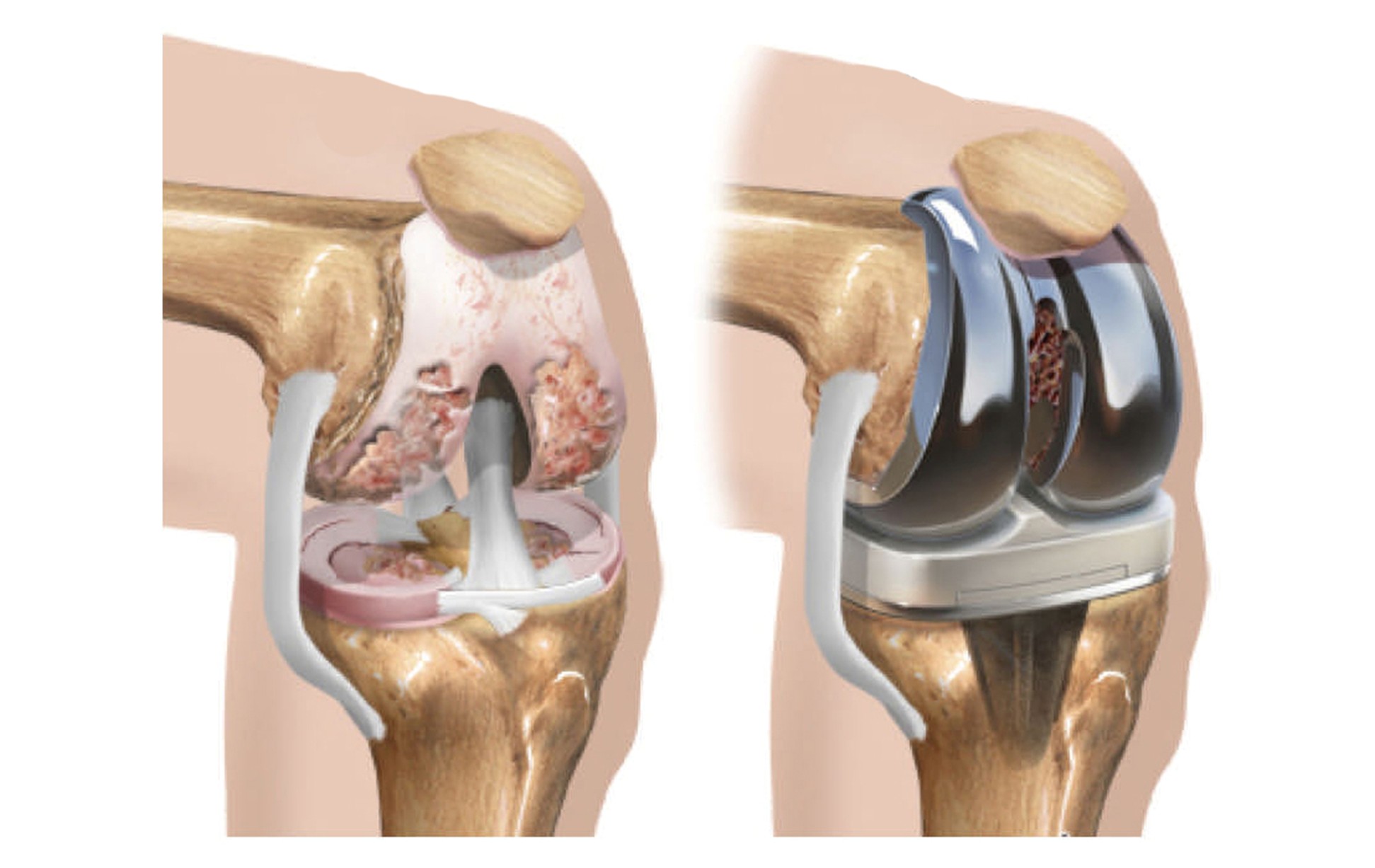
Total knee replacement (TKR) is a highly effective surgical intervention used primarily for patients suffering from end-stage osteoarthritis of the knee. As of 2020, over 700,000 TKRs are performed annually in the United States alone, with projections estimating more than 3.5 million procedures per year by 2030 (Singh et al., 2019). The procedure is particularly common in individuals over the age of 60, with a higher prevalence among women due to their increased risk of osteoarthritis (Hunter & Bierma-Zeinstra, 2019). While the surgery generally results in significant improvements in pain and function, postoperative complications—particularly chronic knee swelling—can hinder recovery and diminish quality of life.
Postoperative swelling is a natural part of the healing process, resulting from surgical trauma, tissue inflammation, and disruption of lymphatic and venous pathways. Most swelling resolves within the first six weeks, but in approximately 15–20% of cases, it persists beyond this timeframe, resulting in chronic edema (Papalia et al., 2020). Chronic knee swelling can significantly restrict range of motion (ROM), increase pain, delay functional milestones, and contribute to patient dissatisfaction (Grosso et al., 2021). This condition disproportionately affects older adults, particularly those with comorbidities such as obesity, hypertension, and reduced physical mobility (Zeni & Snyder-Mackler, 2010).
Conventional interventions for managing postoperative edema include cryotherapy, elevation, compression garments, pharmacological agents (e.g., NSAIDs, corticosteroids), physiotherapy, manual therapy, and in some cases, surgical drainage (Tegner et al., 2020). Physiotherapy often focuses on ROM exercises, muscle strengthening, and gait training. While these methods are generally effective, their success depends on consistent patient compliance, individual healing capacity, and access to quality post-operative care (Dayan et al., 2018).
Massage therapy techniques, such as effleurage and petrissage, are sometimes used adjunctively to address soft tissue congestion and promote circulation. Myofascial release has shown promise in improving flexibility and reducing post-operative adhesions, but it is not primarily aimed at fluid drainage (Barnes, 2012). A growing body of evidence now supports the use of Manual Lymphatic Drainage (MLD) as a non-invasive, effective intervention specifically targeting lymphatic circulation.
MLD is a gentle,
rhythmic technique developed by Dr. Emil Vodder in the 1930s to encourage the
natural drainage of the lymph, which carries waste products away from the
tissues (Foldi et al., 2012). Traditionally used in the management of
lymphedema, MLD has gained interest as a supportive therapy in orthopedic
post-surgical recovery. Clinical trials and observational studies suggest that
MLD can reduce swelling, decrease pain, and accelerate recovery following
procedures such as joint replacement, liposuction, and cancer-related surgeries
(Zaleska et al., 2014; Franks et al., 2006).
A 2020 study by Dönmez et al. demonstrated that patients receiving MLD after TKR had significantly reduced knee circumference and faster improvement in knee flexion compared to a control group. Another trial by Szolnoky et al. (2007) found that MLD, when added to standard care, improved lymphatic flow and pain outcomes in patients with post-surgical edema. These findings align with the principles of evidence-based practice and support MLD’s inclusion as a valid intervention for chronic knee swelling.
Client Profile and Ethical Considerations
The subject of this case study is a 63-year-old female who presented 6 months post-TKR with persistent knee swelling, moderate pain (6/10 on VAS), and limited ROM (flexion to 90°). She had completed a six-week physiotherapy program but reported minimal improvement. Her biological health determinants included mild obesity (BMI 31), controlled hypertension, and reduced activity levels prior to surgery. Psychosocial factors included a strong desire to return to independent living and recreational gardening, but also elevated anxiety about her delayed recovery and fear of long-term disability.
From an ethical standpoint, the principles of beneficence and non-maleficence guided the choice of intervention. MLT was selected because it poses minimal risk, is non-invasive, and has shown clinical efficacy in promoting lymphatic flow. Contraindications such as active infections, deep vein thrombosis, and uncompensated cardiac failure were ruled out during screening (ISL, 2020). The client was fully informed of the procedure, risks, potential benefits, and alternative treatments. A written consent form was signed prior to beginning treatment.
The consent
process included a discussion about the nature of MLT, the number and frequency
of sessions, expected outcomes, and the possibility of limited response due to
individual variability. The therapist practiced active listening throughout
intake and follow-up sessions, documenting the client’s goals, fears, and
expectations. This ensured that treatment was collaborative and responsive to
the client’s evolving needs.
Short- and Long-Term Goals
The short-term goals established with the client included a 2 cm reduction in knee circumference, improved ROM to at least 110°, and a decrease in pain to ≤3/10 on the VAS. Long-term goals included walking 1 km without assistive devices, returning to gardening, and achieving full participation in social activities. The therapist’s objectives were to facilitate lymphatic drainage, reduce interstitial fluid accumulation, and enhance tissue recovery through manual techniques supported by emerging literature.
Although
physiotherapy remains a cornerstone of postoperative rehabilitation, it may not
adequately address fluid overload in certain patients, particularly older
adults with comorbidities. Compression therapy, while effective, may not be
tolerated by all patients due to discomfort or difficulty with application.
Additionally, pharmacological treatments are associated with risks such as
gastrointestinal side effects, cardiovascular concerns, and patient dependency
(Kolb et al., 2021). MLT provides an alternative that works synergistically
with existing modalities and is particularly beneficial for patients who have
plateaued in their recovery.
3. Methods
This case study utilized a structured, reproducible treatment plan applying Manual Lymphatic Therapy (MLT) to address chronic knee swelling in a client post-total knee replacement (TKR). The goal was to evaluate whether MLT reduced edema and improved client comfort, range of motion, and function. The treatment protocol was designed to be patient-centered, evidence-informed, and reproducible by other practitioners.
Client Profile and Initial Assessment
The client, a 63-year-old female, presented 6 months post-bilateral TKR with persistent swelling, stiffness, and discomfort in the operated left knee. The client reported pain levels fluctuating between 3–6/10 on the Visual Analogue Scale (VAS), especially during prolonged standing or walking.
Circumferential swelling measurements at the mid-patella and 10 cm above and below were used to track edema. Active range of motion (AROM), gait observations, and functional mobility were also assessed.
Treatment Plan
The intervention spanned four weeks with a total of four 30-minute MLT sessions, performed weekly. Each session followed the principle of proximal-to-distal sequencing: clearing central lymphatic structures before addressing peripheral congestion and rinsing the at end of each session.
Session Breakdown (per appointment):
1. Clear the terminus, using stationary circles and gentle circular stroking movement.
2. Respiratory diaphragm release techniques to stimulate lymphatic pump.
3. Clear the Cisterna Chyli, cooperating with client’s breathing.
4. Increasing the external iliac lymph node return by gentle eccentric rhythmic pressing.
5. Inguinal lymph node stimulating.
6. Popliteal lymph node therapy.
7. Drainage strokes (pump, scoop, rotary techniques) applied around the knee—medial, lateral, popliteal fossa, being mindful of watersheds.
8. Focal Swelling Reduction. Targeted strokes over fibrotic regions, especially anteromedial knee using slow, rhythmical skin-stretch techniques.
9. Rinse from distal to proximal toward the terminus.
Homecare Protocol
Clients were instructed to elevate the affected leg above heart level for 15–20 minutes twice daily. Gentle active range of motion exercises, ankle pumps, and diaphragmatic breathing exercises were prescribed to enhance lymphatic return. Compression knee sleeves were discussed but deferred to the primary physician’s advice.
Evaluation Tools
Each session began and ended with:
- Circumferential tape measurement: 10 cm above, at, and 10 cm below the patella.
- VAS for subjective pain levels.
- AROM assessment: knee flexion and extension measured using a goniometer.
Clinical Reasoning and Sequencing
Treatments followed a global-to-local-to-focal approach:
l Global: thoracic
duct, diaphragm, Cisterna Chyli, external iliac and inguinal lymphatics.
l Local: popliteal
nodes, upper thigh/hip drainage.
l Focal: direct knee MLT.
Holistic Considerations
In keeping with the four tenets of Manual Osteopathic Therapy (structure-function interrelation, self-healing mechanisms, circulation, and whole-person care), psychosocial aspects were addressed. The client was undergoing mild postoperative depression due to mobility restrictions. Supportive conversation, goal setting, and progress tracking were incorporated to foster motivation and engagement.
Monitoring and Reassessment
After each session, swelling and pain levels were reassessed using the same tools. Client feedback was documented to guide adjustments. All sessions were charted clearly, detailing technique, client response, and any changes made.
Informed Consent
Informed consent
was obtained prior to the first session. The client was educated on the
purpose, procedure, potential benefits, and risks of MLT. Contraindications
(e.g., DVT, active infection) were screened at intake and continuously
monitored.
4. Results
Throughout the four-week treatment period, eight sessions of Manual Lymphatic Therapy (MLT) were administered to address chronic swelling and discomfort following total knee replacement. Results were tracked using standardized assessment tools: circumferential knee measurements, Visual Analogue Scale (VAS) for pain, and goniometric range of motion (ROM) measurements.
Circumferential Measurements (cm)
|
Measurement Location |
Initial |
Final |
Total Reduction |
|
10 cm Above Patella |
51.0 |
48.2 |
2.8 |
|
Mid-Patella |
45.2 |
41.8 |
3.4 |
|
10 cm Below Patella |
39.5 |
36.9 |
2.6 |
Pain Levels (VAS)
|
Session |
Pain Level (VAS) |
|
1 |
6/10 |
|
2 |
4/10 |
|
4 |
1–2/10 |
Pain levels decreased steadily with each session. The client initially reported dull aching and discomfort during mobility; by the final session, pain was described as “mild tightness” only after long periods of walking.
Range of Motion (AROM)
|
Motion |
Initial |
Final |
Change |
|
Flexion |
90° |
115° |
+25° |
|
Extension |
-5° |
0° |
+5° |
Functional observations included improved walking endurance, easier sit-to-stand transitions, and less end-of-day swelling. No adverse effects were reported during or after treatments.
The combination of
quantitative data and client-reported outcomes supports the hypothesis that MLT
can effectively reduce chronic swelling and pain post-TKR. Reassessment after
each treatment confirmed consistent progress, with notable reductions in edema,
improved mobility, and enhanced overall comfort and quality of life.
5. Discussion
This case study aimed to evaluate the effectiveness of Manual Lymphatic Therapy (MLT) in managing chronic post-operative swelling in a client following total knee replacement (TKR). The results supported the initial hypothesis: MLT contributed to a measurable reduction in edema, decreased pain, and improved range of motion (ROM), ultimately enhancing the client’s quality of life. These outcomes align with existing literature that identifies MLT as a supportive therapy for post-surgical swelling and lymphatic dysfunction.
Despite these positive results, several limitations should be acknowledged. This study was based on a single-client case, limiting the generalizability of findings. In addition, all assessments, including circumferential measurements and ROM evaluation, were performed by the therapist, introducing potential for practitioner bias. Although efforts were made to standardize the assessments and remain objective, the inherent subjectivity of single-practitioner studies remains a methodological weakness.
Four treatment sessions were delivered over four weeks, without disruption to other client care. Appointments were scheduled during regular working hours, and time for documentation and assessment was efficiently integrated into session plans. As a result, the case study proved both feasible and cost-effective for the practitioner, while offering considerable benefit to the client. With visible improvements in pain, function, and swelling, the client perceived the intervention as worthwhile and has chosen to continue with biweekly maintenance sessions. The overall cost-benefit analysis is favorable: significant functional gains were achieved with minimal financial investment and no adverse effects.
The therapist benefitted professionally through enhanced skill in applying MLT within a structured, outcome-based protocol. This case deepened the therapist’s understanding of post-operative lymphatic complications and reinforced the value of MLT as a safe, non-invasive, and effective treatment. These insights will inform future care plans for similar presentations, supporting evidence-informed MOT practice.
This case also highlighted the importance of holistic, patient-centered care. Biological determinants of health, including age, prior trauma, and joint degeneration, contributed to delayed healing. Psychosocial determinants such as the client’s motivation, family support, and access to healthcare positively influenced compliance with the treatment plan. Recognizing and addressing these factors is fundamental to effective MOT practice and underscores the four tenets of osteopathy: the body is a unit, structure and function are interrelated, the body is capable of self-healing, and treatment is based on rational application of these principles.
Collaboration with other healthcare providers was essential. The client was concurrently under the care of an orthopedic surgeon and a physiotherapist. Communication between practitioners ensured continuity of care and allowed MLT to complement medical and rehabilitative therapies. Further referrals to a registered dietitian and clinical counselor were recommended to support long-term recovery by addressing inflammation through nutrition and managing post-surgical anxiety.
From a broader perspective, this case study demonstrates how MLT fits within the MOT scope of practice as a supportive tool for managing lymphatic and circulatory concerns. Recommendations include integrating MLT earlier in the post-operative timeline when contraindications permit, and combining it with mobility exercises, hydrotherapy, and nutritional support for enhanced results.
Gaps in research persist.
Larger-scale studies with control groups and standardized protocols are needed
to validate the clinical effectiveness of MLT for TKR recovery. Moreover,
long-term follow-up would clarify whether benefits persist or diminish over
time.
6. Conclusion
Manual Lymphatic
Drainage appears to be a safe and effective intervention for managing chronic
postoperative edema following total knee replacement. By integrating MLD into
routine care, healthcare providers may enhance recovery outcomes, reduce
rehabilitation time, and increase patient satisfaction. Further research with
larger patient samples is recommended to validate findings and support broader
clinical application in orthopedic rehabilitation.
7. Bibliography
- Barnes, J. F. (2012). Myofascial release: The search
for excellence. Therapy Skill Builders.
- Dayan, J. H., Ly, C. L., Kataru, R. P., & Mehrara,
B. J. (2018). Lymphedema: Pathogenesis and novel therapies. Annual
Review of Medicine, 69, 263–276.
- Dönmez, B. O., Karaduman, A., & Topuz, S. (2020).
The effect of manual lymphatic drainage on pain and range of motion after
total knee arthroplasty. Journal of Clinical Orthopaedics and Trauma,
11(1), 125–129.
- Foldi, E., Foldi, M., & Kubik, S. (2012). Textbook
of lymphology for physicians and lymphedema therapists. Elsevier.
- Franks, P. J., Moffatt, C. J., & Doherty, D. C.
(2006). Assessment of quality of life in lymphedema. Lymphatic Research
and Biology, 4(4), 221–228.
- Grosso, M. J., Gabor, J. A., Schroeder, L., &
Hozack, W. J. (2021). Chronic swelling after total knee arthroplasty:
Diagnosis and treatment. The Journal of Arthroplasty, 36(1), 60–65.
- Hunter, D. J., & Bierma-Zeinstra, S. (2019).
Osteoarthritis. The Lancet, 393(10182), 1745–1759.
- International Society of Lymphology (ISL). (2020). The
diagnosis and treatment of peripheral lymphedema: 2020 Consensus Document.
Lymphology, 53(1), 3–19.
- Kolb, L., Ramey, K., & Darragh, A. R. (2021).
Occupational and physical therapy in post-operative edema management. Physical
Therapy Reviews, 26(2), 130–136.
- Papalia, R., Vasta, S., Russo, F., Del Buono, A., Di
Martino, A., & Maffulli, N. (2020). Post-operative complications
following knee arthroplasty. International Orthopaedics, 44(6),
1205–1211.
- Singh, J. A., Yu, S., Chen, L., & Cleveland, J. D.
(2019). Rates of total joint replacement in the United States. JAMA
Network Open, 2(3), e190471.
- Szolnoky, G., Dobozy, A., & Kemény, L. (2007).
Manual lymph drainage efficiently reduces postoperative swelling and pain
after total knee arthroplasty. Lymphology, 40(2), 85–92.
- Tegner, Y., Lysholm, J., & Odensten, M. (2020).
Rehabilitation after knee arthroplasty: A review. Acta Orthopaedica
Scandinavica, 91(3), 289–295.
- Zaleska, M., Olszewski, W. L., Durlik, M., &
Cendrowski, K. (2014). The use of manual lymphatic drainage in
postoperative edema management. Lymphatic Research and Biology, 12(1),
21–26.
- Zeni, J. A., & Snyder-Mackler, L. (2010). Early
postoperative measures predict 1- and 2-year outcomes after unilateral
total knee arthroplasty. Physical Therapy, 90(11), 1608–1617.