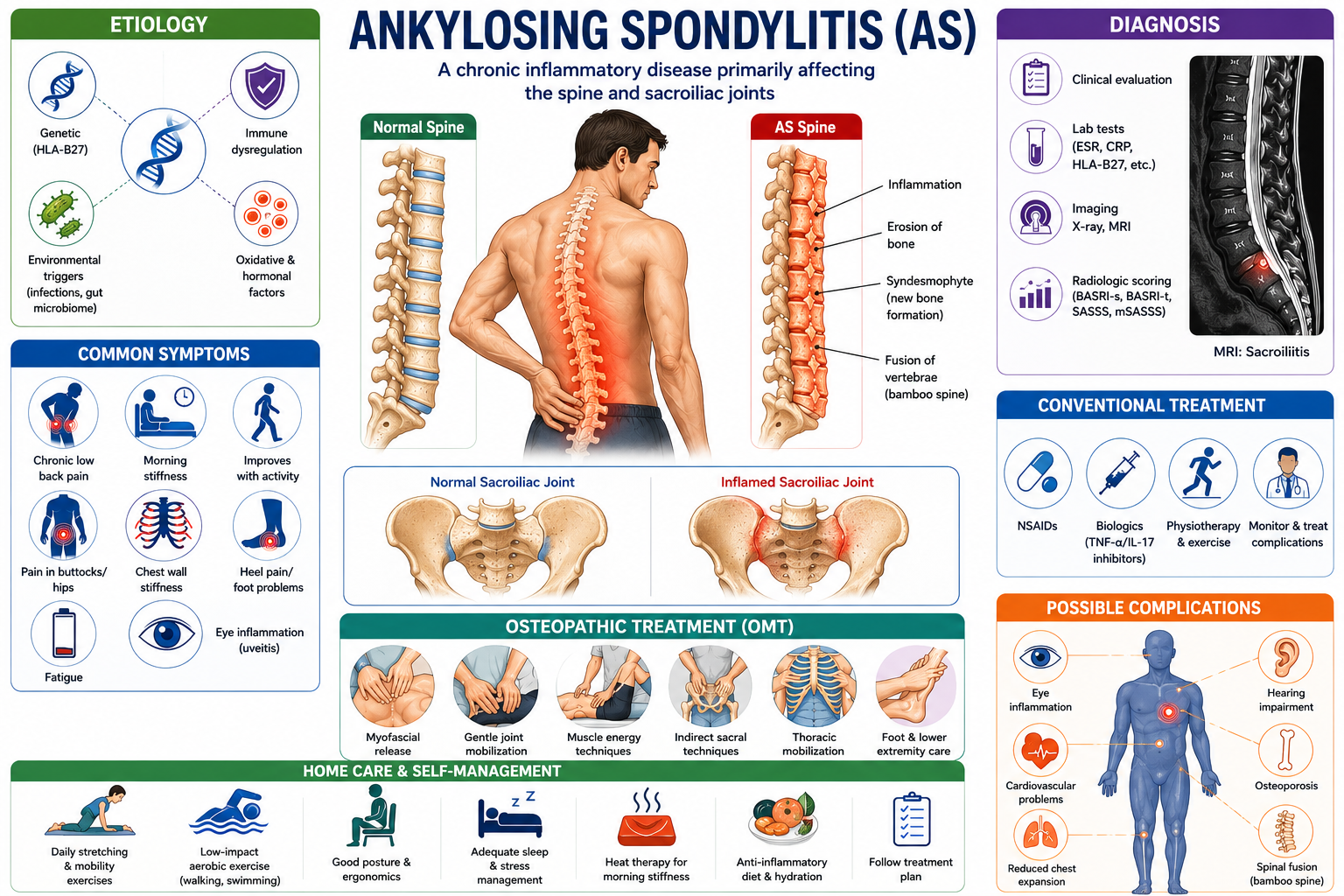
Ankylosing spondylitis (AS) is a chronic inflammatory disease primarily affecting the axial skeleton, leading to pain, stiffness, and progressive spinal fusion. As a seronegative spondyloarthropathy, AS has multifactorial contributors including genetic predisposition, immune dysregulation, biomechanical stress, and systemic inflammatory responses. Early detection and interdisciplinary management—including osteopathic manual therapy and structured home care—can significantly improve long-term function, pain control, and quality of life.
Etiology
The exact cause of AS is multifactorial, with strong genetic influence. Previous reviews describe AS as a distinct rheumatologic entity characterized by chronic inflammation at spinal and sacroiliac joints2. Genetic susceptibility is primarily linked to HLA-B27, although environmental and immunologic factors play important roles.
Biologic pathways involving tumor necrosis factor-alpha (TNF-α) have been shown to strongly contribute to AS pathogenesis. Indirect comparisons demonstrate that multiple TNF-α inhibitors—administered subcutaneously—are effective for AS, suggesting a central role of TNF-α mediated inflammation in disease expression1.
Additional immunologic contributors include oxidative stress and abnormal antioxidant activity. Research on serum oxidative–antioxidative balance shows AS patients often present with elevated oxidative stress markers, reflecting systemic inflammatory burden6.
Hormonal factors may also influence disease activity. Serum melatonin levels, for example, have been studied for correlation with AS severity, suggesting potential links between circadian rhythm, immune modulation, and disease fluctuations3.
Symptoms
AS typically develops in early adulthood, with symptoms progressing gradually. Early manifestations include chronic low back pain lasting over three months, morning stiffness, and improvement with activity rather than rest. Over time, inflammation contributes to progressive spinal rigidity, loss of lumbar lordosis, and thoracic hyperkyphosis.
Peripheral symptoms can include hip, knee, or foot dysfunction. A clinical study showed measurable foot function impairments among AS patients, emphasizing the systemic biomechanical consequences of chronic inflammation4.
Extra-articular symptoms may include:
- Uveitis
- Fatigue
- Chest wall restriction
- Cardiovascular involvement such as rare sinus Valsalva aneurysm8
Diagnosis
Diagnosis is based on clinical presentation, imaging, and laboratory findings. Radiologic evaluation plays a central role. Comparative studies of commonly used scoring systems—such as BASRI-s, BASRI-t, SASSS, and modified SASSS—indicate varying performance for assessing structural damage and progression5. MRI is particularly valuable for detecting early sacroiliitis before radiographic changes develop.
Laboratory assessments may include:
Early identification is essential for preventing progression and maintaining functional mobility.
Conventional Medical Treatment
Medical management aims to reduce inflammation, relieve pain, maintain mobility, and delay structural progression.
1. Pharmacologic Management
NSAIDs remain first-line therapy for pain and stiffness. If inadequate, biologic therapies targeting TNF-α or IL-17 are recommended. Indirect comparison of subcutaneous TNF-α inhibitors confirms their efficacy and comparable therapeutic outcomes across agents1.
Corticosteroid injections may be used for peripheral joint involvement, and DMARDs are occasionally employed for non-axial symptoms.
2. Exercise-Based Rehabilitation
Exercise is a cornerstone of AS management. Mobility routines, extension-based exercises, breathing expansion, and posture correction reduce pain and maintain spinal flexibility.
3. Monitoring for Systemic Manifestations
Complications such as osteoporosis, cardiovascular changes, and pulmonary restriction should be periodically evaluated.
Osteopathic Treatment Approach
Osteopathic manipulative treatment (OMT) provides a complementary, non-pharmacologic option that addresses fascial restrictions, joint mobility, circulation, lymphatic flow, and autonomic balance. OMT aims to improve biomechanics and reduce pain without aggravating inflammation.
1. Gentle Articulation and Mobilization
Low-velocity, low-amplitude (LVLA) mobilization of the thoracic, lumbar, and sacroiliac regions helps maintain segmental motion while avoiding excessive stress on inflamed joints. Indirect techniques are preferred in acute inflammatory stages.
2. Myofascial Release (MFR)
Chronic inflammation often induces fascial contracture in spinal extensors, intercostals, psoas, and gluteal structures. MFR reduces tension, improves circulation, and enhances breathing mechanics.
3. Balanced Ligamentous Tension (BLT) and Functional Techniques
These methods decrease nociceptive drive, encourage neuromuscular relaxation, and provide symptom relief in restricted spinal regions.
4. Craniosacral and Breathing Techniques
Cranial rhythmic impulse and respiratory motion support autonomic regulation and thoracic cage expansion, addressing the common complaint of restricted chest wall motility.
5. Osteopathic Management of Peripheral Effects
Given that foot function impairment is common in AS4, OMT to the lower extremities—including ankle mobilization and intrinsic foot muscle balancing—may improve gait efficiency and reduce compensatory lumbar stress.
Home Care and Self-Management
A structured home program is essential for long-term success, complementing medical and osteopathic treatment.
1. Daily Mobility Routine
Patients should perform thoracic extension exercises, hip mobility drills, cervical rotation, and global stretching to counteract progressive stiffness.
2. Posture and Ergonomics
Working toward neutral posture helps reduce mechanical stress on inflamed structures. Strategies include:
- Using lumbar support during sitting
- Avoiding prolonged flexion positions
- Practicing wall-based posture alignment drills
3. Breathing Expansion Exercises
Deep diaphragmatic breathing enhances rib mobility, improves pulmonary function, and offsets thoracic rigidity.
4. Heat Therapy and Activity Pacing
Heat reduces stiffness, particularly in the morning. Activity pacing avoids systemic flare-ups while maintaining consistent movement.
5. Strengthening Program
Strengthening should emphasize:
- Gluteal activation
- Posterior chain reinforcement
- Core stability
- Scapular control
These support spinal stability and functional endurance.
Conclusion
Ankylosing spondylitis is a complex inflammatory condition requiring multifaceted management. Medical treatment, biologics, structured rehabilitation, and osteopathic care together help preserve spinal mobility, reduce pain, and prevent long-term complications. Home-based exercises and lifestyle strategies remain crucial for sustaining treatment benefits. With early diagnosis and comprehensive care, most individuals can maintain functional independence and long-term quality of life.