Neck pain is one of the most common musculoskeletal complaints worldwide and can significantly affect sleep, daily function, and quality of life. Among the many contributing factors to neck discomfort, sleeping posture and pillow support have gained increasing attention in recent years. The term “pillow neck” is commonly used to describe neck pain, stiffness, or discomfort associated with inappropriate pillow design, incorrect pillow height, or inadequate cervical support during sleep. Because humans spend approximately one-third of their lives sleeping, the mechanical environment of the head and neck during this period plays an important role in spinal health [3].
The cervical spine is a highly mobile and structurally delicate region responsible for supporting the weight of the head while allowing a wide range of motion. When sleeping posture or pillow support does not maintain the natural curvature of the cervical spine, prolonged mechanical stress may occur in muscles, ligaments, and intervertebral joints. Over time, this may lead to symptoms such as morning neck stiffness, headaches, shoulder tension, or sleep disturbances. Research increasingly suggests that pillow design, height, and material may influence cervical alignment, muscle activity, and sleep quality [1].
Prevalence of Neck Pain and Lifestyle Factors
Neck pain is extremely common in modern populations. Studies indicate that a large proportion of adults experience neck pain at some point in their lives, with significant impacts on work productivity and daily activities [3]. Among younger populations, particularly college students and office workers, the prevalence of neck pain has increased due to prolonged computer use, smartphone dependence, poor posture, and reduced physical activity [2].
Although daytime posture is widely recognized as a major factor in neck pain, nighttime factors such as pillow characteristics and sleeping position have also been identified as potential contributors. Poor sleep ergonomics may place sustained strain on cervical structures for several hours each night, potentially worsening symptoms or delaying recovery from existing neck disorders [1].
Biomechanics of the Cervical Spine During Sleep
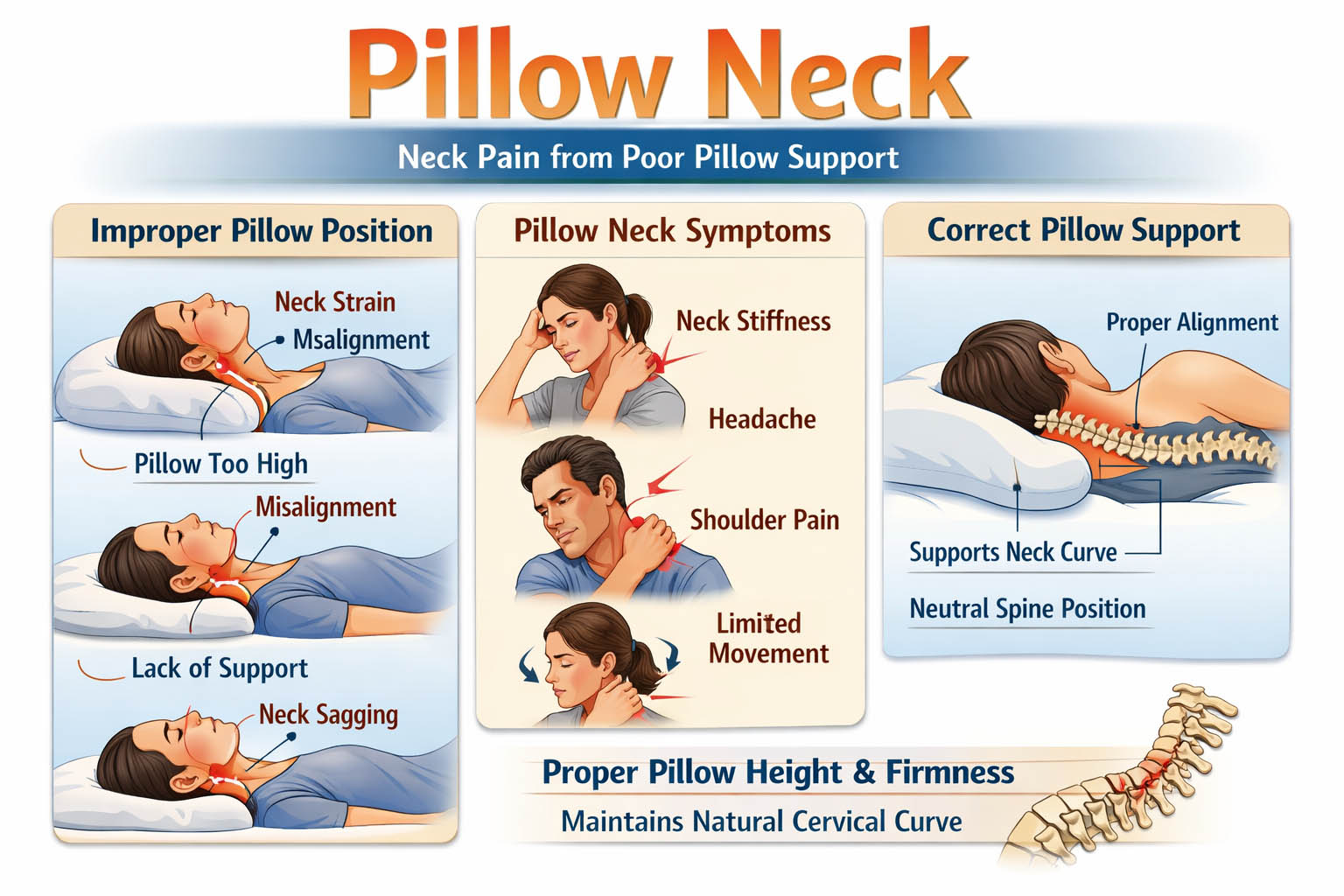
Maintaining proper cervical alignment during sleep is essential for reducing mechanical stress on the neck. Ideally, a pillow should support the head and neck in a way that preserves the natural cervical lordosis, the gentle inward curve of the neck. When pillow height is too high or too low, the head may tilt forward, backward, or sideways, creating abnormal loading of the cervical spine.
Biomechanical studies show that pillow height and design directly affect the pressure distribution between the head, neck, and sleeping surface. Improper pillow height can alter the alignment of the cranio-cervical complex and increase muscular effort needed to stabilize the head during sleep. As a result, individuals may experience increased neck muscle activity and fatigue overnight, which can manifest as morning pain or stiffness.
Experimental studies have also demonstrated that pillow height influences neck muscle activation. When the pillow does not adequately support the cervical region, muscles such as the upper trapezius and cervical extensors may remain partially activated during sleep, preventing full relaxation of the neck muscles [4]. This persistent muscle tension may contribute to the development of “pillow neck.”
The Role of Pillow Design
Different pillow designs have been developed to improve cervical support and sleep ergonomics. Common designs include traditional pillows, contour cervical pillows, memory foam pillows, and ergonomic pillows with targeted neck support. Research suggests that pillow characteristics such as height, firmness, shape, and material can influence sleep comfort and cervical alignment [1].
A systematic review and meta-analysis examining pillow design found that appropriate pillow selection may improve neck pain, reduce waking symptoms, enhance sleep quality, and support better spinal alignment [1]. Some specialized pillow designs aim to support the cervical curve while allowing the head to rest comfortably, thereby reducing abnormal pressure and muscle strain.
Clinical trials also indicate that ergonomic pillows may reduce disability and pain in individuals with chronic neck discomfort. For example, a randomized controlled trial comparing a specialized “spring pillow” with educational interventions found improvements in pain intensity and functional outcomes in patients with chronic nonspecific neck pain [16].
Pillow Height and Individual Differences
One of the most critical factors affecting cervical comfort during sleep is pillow height. A pillow that is too high may flex the neck excessively, while a pillow that is too low may allow the head to fall backward or sideways. Both situations may disrupt spinal alignment and increase mechanical stress on cervical tissues.
Research indicates that optimal pillow height varies among individuals depending on body size, shoulder width, sleeping position, and spinal anatomy [7]. For example, side sleepers generally require a thicker pillow to maintain alignment between the head and the spine, whereas back sleepers may require a lower pillow to preserve natural cervical curvature.
Studies investigating pillow height adjustment have shown that optimizing pillow height can significantly reduce neck pain and somatic symptoms. Adjustments that better support the cervical spine may improve both sleep comfort and morning symptoms [10].
Pillow Preference and Patient Experience
Individual preference also plays a role in pillow selection. Studies examining pillow preferences among individuals with neck pain suggest that comfort perception is influenced by personal sleeping habits, spinal degeneration, and previous experiences with pillow types [9]. While ergonomic recommendations are useful, subjective comfort remains an important factor in determining whether a pillow will be used consistently.
Furthermore, research involving individuals with forward head posture indicates that different pillow designs can influence muscle activity in both the neck and upper back. Appropriate pillow support may reduce abnormal muscle activation patterns during sleep, potentially contributing to better recovery and reduced morning discomfort.
Sleep Quality and Overall Health
Beyond neck pain, pillow support may influence overall sleep quality. Poor sleep ergonomics may contribute to fragmented sleep, discomfort during the night, and waking symptoms such as stiffness or headaches. Improving pillow support may therefore play a role in promoting better sleep and overall well-being [5].
Advances in sleep monitoring technologies have also allowed researchers to study the relationship between sleep environment and sleep quality more accurately. Modern wearable sleep trackers provide valuable data about sleep patterns and disturbances, helping researchers understand how factors such as pillow support may affect sleep health [8].
Sleep Quality and Overall Health
Beyond its role in neck pain, pillow support may also influence overall sleep quality. Inadequate sleep ergonomics can contribute to fragmented sleep, nocturnal discomfort, and morning symptoms such as stiffness or headaches. Optimizing pillow support may therefore help promote more restful sleep and enhance overall well-being [5].
Advances in sleep monitoring technologies have also allowed researchers to study the relationship between sleep environment and sleep quality more accurately. Modern wearable sleep trackers provide valuable data about sleep patterns and disturbances, helping researchers understand how factors such as pillow support may affect sleep health [8].
Conclusion
“Pillow neck” represents an increasingly recognized contributor to neck pain and sleep discomfort. As research continues to explore the biomechanics of sleep and cervical support, it has become clear that pillow design, height, and individual ergonomics play important roles in maintaining healthy spinal alignment during sleep. Selecting an appropriate pillow and optimizing sleeping posture may help reduce neck pain, improve sleep quality, and support long-term cervical spine health.
Future research will likely focus on personalized pillow design and advanced sleep monitoring technologies to better understand the interaction between sleep environment and musculoskeletal health. Such developments may lead to more individualized strategies for preventing and managing pillow-related neck discomfort.
References
- Chun‑Yiu JP, Man‑Ha ST, Chak‑Lun AF. The effects of pillow designs on neck pain, waking symptoms, neck disability, sleep quality and spinal alignment in adults: A systematic review and meta‑analysis. Clin Biomech (Bristol). 2021;85:105353. :contentReference[oaicite:0]{index=0}
- Gao Y, Chen Z, Chen S, Wang S, Lin J. Risk factors for neck pain in college students: a systematic review and meta‑analysis. BMC Public Health. 2023;23:1502.
- Binder AI. Neck pain. BMJ Clin Evid. 2008;2008:1103.
- Jiao R, Xiao W, Wang M, Yu S, Li H. The impact of pillow height on neck muscle activity: a pilot study. Sleep Breath. 2024.
- Ghosh S, Goyal M, Goyal K. Effect of pillow on pain, disability and sleep quality in patients with chronic neck pain: A systematic review. Rehabilitacion. 2025.
- Saccomanno S, Saran S, Coceani Paskay L, et al. Risk factors and prevention of choking. Eur J Transl Myol. 2023;33(4):11471.
- Tian S, Yao C, Wang Y, et al. The individualized optimal pillow height and neck support design for side sleepers. Med Biol Eng Comput. 2025;63(2):535‑544.
- Lee T, Cho Y, Cha KS, et al. Accuracy of wearable consumer sleep trackers: Prospective multicenter validation study. JMIR Mhealth Uhealth. 2023;11:e50983.
- Gordon SJ, Grimmer KA, Buttner P. Pillow preferences of people with neck pain and known spinal degeneration. Eur J Phys Rehabil Med. 2019;55(6):783‑791.
- Yamada S, Hoshi T, Toda M, et al. Changes in neck pain and somatic symptoms before and after adjustment of pillow height. J Phys Ther Sci. 2023;35(2):106‑113.
- Mohammed A, Isaacs M, Rahnama S. U‑shaped neck pillow for chondrodermatitis nodularis helicis. J Am Acad Dermatol. 2020;82(2):e41‑e42.
- Zenian J. Pillow otalgia. Arch Otolaryngol Head Neck Surg. 2001;127(10):1288.
- Angsuwatcharakon P, Plodaksorn A, et al. Ergonomic wedge pillow to reduce neck pain after prone ERCP. Surg Endosc. 2025.
- Vanti C, Banchelli F, Marino C, et al. Effectiveness of a “Spring Pillow” versus education in chronic nonspecific neck pain. Phys Ther. 2019;99(9):1177‑1188.
- Kiatkulanusorn S, Suato BP, Werasirirat P. Analysis of neck and back muscle activity during the application of various pillow designs. J Back Musculoskelet Rehabil. 2021;34(3):431‑439.
- Ren S, Wong DW, Yang H, et al. Effect of pillow height on the biomechanics of the head‑neck complex. PeerJ. 2016;4:e2397.