Introduction
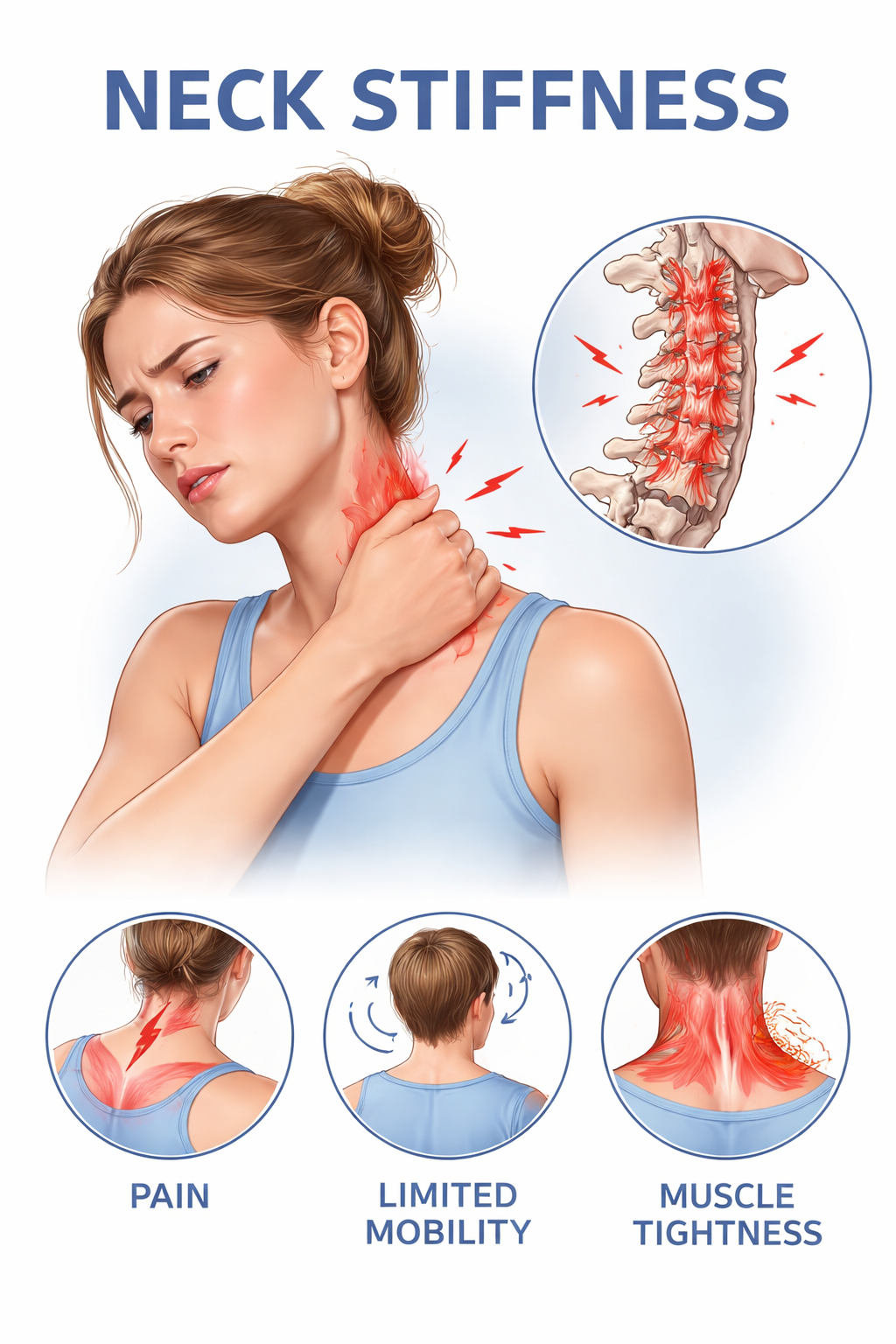
Neck stiffness and chronic nonspecific neck pain are widespread complaints affecting quality of life, work productivity, and physical function globally. Neck pain is estimated to affect more than one-third of adults at some point in their lives and often becomes a chronic, recurrent issue. Manual therapy approaches—including osteopathic manipulative treatment (OMT)—are widely used in complementary and integrative health, but the evidence base specific to neck stiffness and cervical somatic dysfunction has been debated. This review explores current research on osteopathic treatment approaches for neck stiffness and nonspecific neck pain, including randomized controlled trials, systematic reviews, and mechanistic studies.
Osteopathic Manipulative Treatment (OMT): Concept and Mechanisms
Osteopathic manipulative treatment (OMT) refers to a set of hands-on techniques—such as soft tissue manipulation, muscle energy techniques (MET), high velocity low amplitude (HVLA) thrusts, counterstrain, and myofascial release—aimed at improving musculoskeletal function, reducing pain, and enhancing physiological homeostasis. These techniques are theoretically grounded in osteopathic principles emphasizing the interrelationship between structure and function and the body’s inherent ability to heal itself.
Mechanistically, OMT is proposed to influence local tissue mechanics (reducing muscle tone, improving joint mobility) and neurophysiological pathways (modulating nociceptive input, normalizing autonomic nervous system activity). A recent study using ultrasound shear wave elastography suggested that neck muscle stiffness correlates with somatic dysfunction and that OMT can objectively reduce muscle stiffness measures, indicating potential biomechanical effects of hands-on treatment in the cervical region.
Clinical Trials and Evidence in Chronic Neck Pain
The most rigorous clinical evidence for OMT in neck pain arises from randomized controlled trials (RCTs) examining chronic nonspecific neck pain rather than acute single-event stiffness. One significant RCT by Cholewicki et al. (2022) investigated the effects of OMT on pain, disability, and health-related outcomes in adults with chronic neck pain. Over 4–6 weeks, OMT resulted in statistically significant reductions in average and current pain scores and disability indices compared to a waiting period control. Additionally, secondary outcomes including sleep, fatigue, and depressive symptoms improved significantly without serious adverse events.
These results suggest that OMT—when applied within a structured clinical program—can reduce pain and disability and improve overall physical well-being in adults with chronic neck pain.
A 2022 systematic review and meta-analysis evaluated OMT interventions for non-specific neck pain across randomized trials. This review included five RCTs and found that osteopathic manipulative interventions were statistically superior to no intervention or sham treatment regarding pain reduction and functional improvement. However, the authors rated the, primarily due to small sample sizes, heterogeneity in treatment protocols, and methodological limitations such as risk of bias.
A similar earlier review (2015) also reported that OMT produced clinically meaningful effects on pain in chronic nonspecific neck pain but faced limitations in small sample sizes and variable comparison groups.
The overall conclusion from these systematic reviews is that while positive effects are often reported, the strength of evidence remains limited, making definitive clinical recommendations premature without further high-quality trials.
Beyond symptom-based outcomes, some studies have explored how OMT affects physiological function:
- Ultrasound Shear Wave Elastography: This emerging method measured muscle stiffness objectively and found that greater longitudinal shear wave velocity in neck muscles correlated with somatic dysfunction. OMT significantly reduced stiffness measurements, suggesting a measurable physiological effect on tissue properties.
- ANS and Musculoskeletal Function: A comprehensive 2024 systematic review examined the effects of manual osteopathic techniques on autonomic nervous system (ANS) function and head-neck-shoulder musculoskeletal outcomes. While studies varied in design and quality, some evidence suggested that manual techniques might modulate autonomic responses and influence musculoskeletal function in the head-neck complex.
Case Reports and Individual Outcomes
Case reports, while lower on the evidence hierarchy, provide clinically relevant insights, especially where RCT data is scarce. For example, a 2024 case report documented the use of OMT in a patient with chronic neck stiffness after a motor vehicle collision (MVC). After two years of monthly OMT sessions (following initial plateau with physical therapy), the patient reported improved range of motion, reduced pain, and reduced neurological symptoms. Although not generalizable, this case highlights potential benefits in complex or refractory presentations and underscores the need for controlled research in post-traumatic neck stiffness.
Safety and Adverse Events
Manual therapies including osteopathic techniques may carry risks, especially in cervical applications. While many studies report mild transient soreness post-treatment, serious adverse events are uncommon in properly trained hands. Systematic reviews of spinal manipulative therapies (encompassing chiropractic and manual therapies) suggest that serious adverse events are rare but possible; thus clinical judgment and screening for red flags (e.g., vascular disorders, osteoporosis) remain essential.
Critical Considerations and Limitations in the Literature
Much of the research on OMT and neck pain faces common issues:
-
Heterogeneity of Interventions: OMT is personalized and practitioner dependent, making it difficult to standardize protocols across trials.
-
Small Samples and Bias Risk: Many studies have small sample sizes, inadequate blinding, and other methodological limitations that downgrade overall evidence quality.
-
Outcome Measures: Variations in outcome instruments and follow-up durations complicate comparisons across studies.
-
Placebo/Sham Controls: Constructing credible sham OMT is challenging, and some reviews found no superiority over placebo in mixed manual therapy contexts.
These limitations do not invalidate reported benefits but emphasize cautious interpretation.
Future Directions in Research
To strengthen the evidence base for osteopathy in neck stiffness and pain:
- High-Quality RCTs: Larger, well-powered randomized trials comparing standardized OMT protocols with sham and active controls.
- Objective Physiological Measures: Incorporating biomarkers (e.g., elastography, inflammatory markers, neurophysiological signals) to elucidate mechanisms of change.
- Standardized Reporting: Adoption of CONSORT/PRISMA standards and transparent intervention descriptions (e.g., TIDieR checklist).
- Subgroup Analysis: Identifying which patient profiles respond best (e.g., chronic vs acute, trauma vs idiopathic).
Conclusion
The current literature indicates that osteopathic manipulative treatment offer benefits in reducing pain and improving function in individuals with chronic and nonspecific neck pain, including stiffness as a symptom, by increasing the mobility of the cervical spine. Some mechanistic evidence supports measurable changes in muscle tissue properties. However, the overall quality of evidence is low to moderate, with significant research gaps. While clinical experience and some controlled data suggest potential utility, definitive evidence supporting OMT as a first-line intervention for neck stiffness requires further high-quality research.
References
- Dal Farra F, Buffone F, Risio RG et al. Effectiveness of osteopathic interventions in non-specific neck pain: systematic review and meta-analysis. Complement Ther Clin Pract. 2022.
- Cholewicki J, Popovich JM Jr, Reeves NP et al. OMT effects on chronic neck pain: RCT. PM R. 2022.
-
Gao J, Lynch E, Coleman M et al. Ultrasound elastography assessing OMT effects. J Osteopath Med. 2025.
-
Stępnik J, Czaprowski D, Kędra A. Manual osteopathic techniques and head-neck function. Front Med. 2024.
-
Jost JM, Stoll VK, Waters HB. OMT for chronic neck stiffness post-MVC: case report. Cureus. 2024.
-
Systematic review of OMT vs sham/placebo for NP/LBP outcomes. PMC. 2023.
-
Systematic review of manual therapy for neck pain (includes cervical manipulation). NCBI Bookshelf. 2015.
-
International Journal of Osteopathic Medicine OMT for chronic neck pain (2015 review).
-
Related OMT methodological overview and issues (PRISMA concerns). Turn0search2 summarizing Dal Farra review.
-
Clinical and physiological context for manual therapies in neck pain. Secondary literature referenced in Dal Farra review.